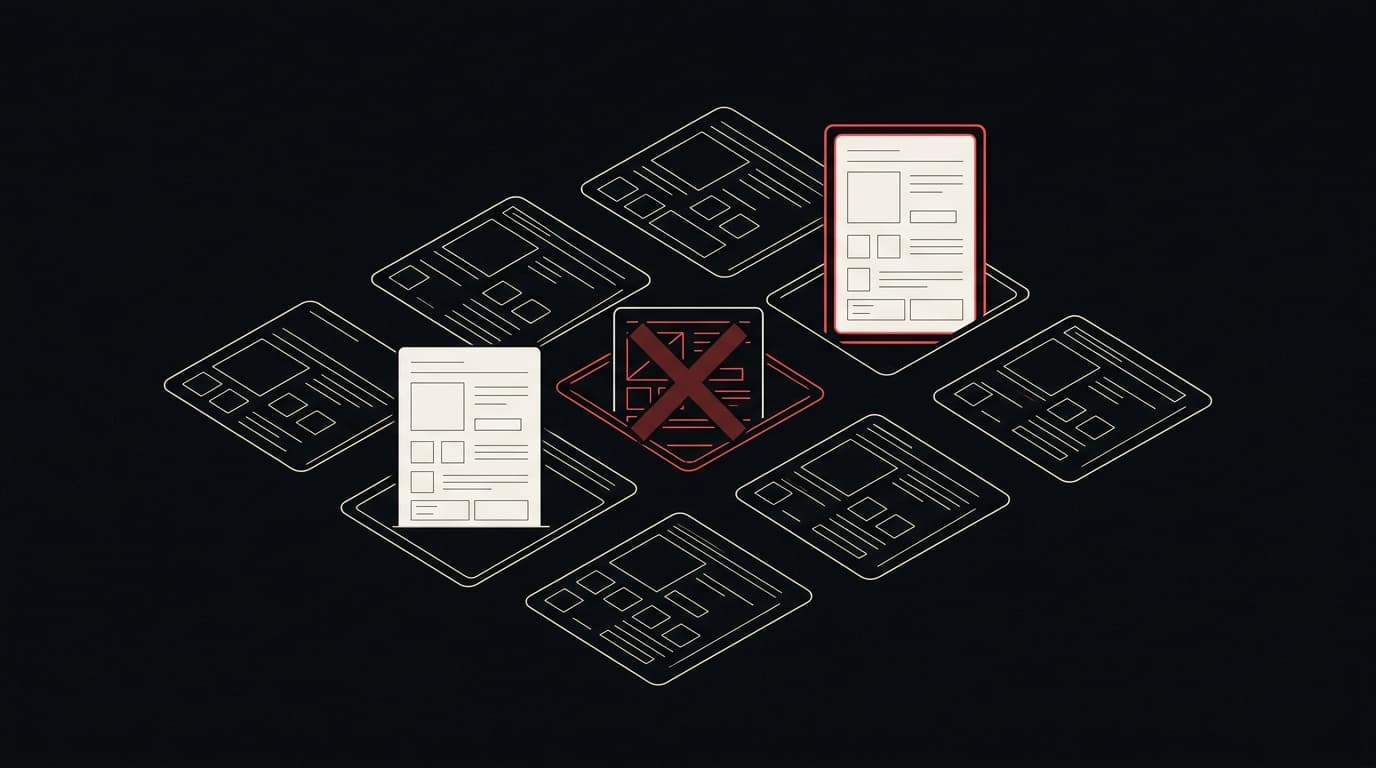
You found the listing. You filed the report. A week later the platform emailed to say it had been removed. Then, a few days after that, someone on your team found the same photos, the same title and the same price under a different seller name.
This is the normal outcome, not a failure on your part. To deal with it you need to understand what a takedown removes and what it leaves behind.
What a takedown actually removes
A successful notice removes one listing, or occasionally one seller account. It doesn't remove:
- The inventory. The goods are still sitting in a warehouse. The seller paid for them and has every reason to sell them somewhere else.
- The listing assets. Your product photos, the copied description and the keyword-stuffed title live on the seller's hard drive. Relisting takes minutes.
- The supply. The factory or wholesaler that made the goods is usually a different party from the seller you reported, and it sells to many resellers.
- The demand. Shoppers are still searching for your product at a lower price. The search traffic that made the listing worth creating hasn't changed.
So a removal raises the seller's cost a little: a new account, a new listing, maybe a short delay. It doesn't change their economics. If the margin on a fake is healthy, one removal is a small operating expense to them.
The common relisting patterns
Once you have watched a few cycles, the same shapes keep turning up.
Same seller, new listing. The simplest case. Marketplaces generally act against repeat infringers, but sellers often get a few strikes before an account is closed, and the policies differ between platforms. Each relisting before the account closes is another listing to find and report.
New seller, same listing. The account was closed, so the seller opened another one. You can tell by the reused photos, an identical title with one word changed, the same price, and often the same shipping origin.
Same goods, softer wording. After a trademark complaint, the seller removes your brand name from the title and writes something like "compatible with" or "inspired by", or misspells the mark. The photos still show your product. These listings are harder to catch with a keyword search, and they need a different argument in the notice (see DMCA or trademark complaint?).
Platform hop. The listing disappears from one marketplace and turns up on another, or on a standalone store built with a hosted shop builder, which comes with its own reporting process (see the platform-by-platform guide).
Wholesale fan-out. On wholesale marketplaces, a single supplier listing can feed dozens of retail listings elsewhere. Removing the retail listings without touching the supplier is the slowest way to make progress.
Why this changes how you should think about cost
If every removal were permanent, brand protection would be a project: find everything, file everything, done. Because sellers relist, it's a recurring process, and the cost is better counted per month than per notice.
That has a few practical consequences:
- Timing matters more than volume. A listing removed two days after it goes live has made few sales and collected few reviews. A listing removed after three months has already done most of its damage. How quickly you find relisted copies matters more than how many you eventually remove.
- You need a memory. You can only spot a relisting if you know what the original looked like: its photos, title, seller name and price. Without a record of past findings, every relisting looks like a brand-new problem, and you lose the repeat-infringer argument that would get an account closed rather than one listing.
- Some findings aren't worth chasing. A site on hosting that ignores abuse reports, in a jurisdiction where nobody will act, will stay up whatever you file. Time is better spent on listings on platforms that respond.
What actually reduces relisting
You can't stop relisting completely. You can make it more expensive and less worth the effort. In rough order of effect:
Report the account, not just the listing
When a seller relists, say so in the complaint and reference your earlier reports. Most large marketplaces have repeat-infringer policies, and they work best when the reports show a pattern rather than a series of unrelated incidents. Keep the report IDs and dates. (The evidence file covers what to record.)
Go upstream when you can
If the same photos and specs keep appearing on retail listings, look for the wholesale source. Wholesale and B2B platforms run their own IP complaint programs. One supplier removal can dry up several retail sellers at once.
Register where the platforms reward it
Some marketplaces give rights owners who register their trademark with them extra tools: proactive filtering, faster reporting, or search across the catalogue. These programs usually require a registered trademark, which is one more reason to get your registrations sorted before you need them. Check each platform's current eligibility rules; they change.
Protect your images
A large share of counterfeit listings use the brand's own product photography. Copyright in those photos gives you a second route to a takedown that doesn't depend on the seller using your trademark. That matters when sellers deliberately keep your brand name out of the listing.
Watch on a schedule, and compare against last time
The step that does the most is the dullest: run the same searches regularly and compare the results with the previous run. New URLs are what matter. A listing that reappears after removal should be flagged as a relisting, not reported as new, so the next notice can say so.
A simple routine for doing this yourself
If you are handling this in-house, a workable minimum looks like this:
| Step | How often | What you keep |
|---|---|---|
| Run your search set (brand name, brand + "replica", brand + product names, on each marketplace you sell on) | Weekly | Every URL found, with date |
| Compare against last week's list | Weekly | New URLs and reappeared URLs, flagged separately |
| Capture evidence for new findings | As found | Screenshot, URL, seller name, price, date |
| File notices | As found | Report ID, channel, date filed |
| Check whether filed listings are gone | 1–2 weeks after filing | Outcome, date confirmed |
The spreadsheet is the important part. Without it, you can't tell a new infringer from a returning one, and you can't show a platform that a seller is a repeat offender. How to find counterfeits of your product online covers the search set in detail.
When a recurring problem needs recurring help
For a brand with a handful of fakes on one marketplace, the routine above takes an hour or two a week, and it's worth doing yourself. It stops being reasonable when the comparison step gets too big for a spreadsheet, or when relistings are turning up faster than you can review them. That's the point to weigh DIY against hiring help, and the answer depends mostly on how much reviewer time the volume really needs.
Whichever you choose, plan for the problem to keep coming back, and judge your results by how quickly you catch each return rather than by whether listings ever stop appearing.
See where you stand today. A free Defenex scan searches the open web for counterfeit listings, lookalike domains and impersonation of your brand, and quotes the evidence from each page. It takes about 90 seconds and you don't need an account. Run it again next month and you'll see how much has come back.